Ode to the Xuixu- Cream-Filled Pastry-(or a theatrical representation in 3 acts)
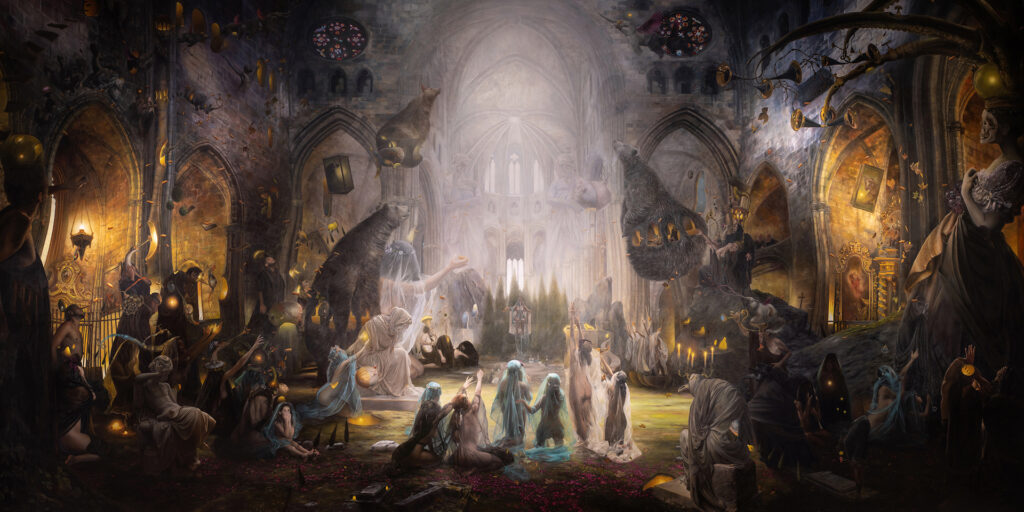
Quim Hereu transforms the central nave of Girona Cathedral into the perfect stage for honoring the most magical, outrageous, and spectacular creation ever crafted by human hands: the xuixo.
In this symbolic setting, eternal life and death collide—two forces locked in fundamental opposition.
This painting, a tribute to Freedom, stands apart from the other two works in the Estrambòtic Trilogy—Time and Power—in one key way: there’s no dominant central figure. Instead, each viewer is left to interpret what freedom means to them. That said, a small but powerful detail anchors the scene—a figure of Queen Ermessenda, seated regally on Charlemagne’s throne, a seat no woman had ever claimed until now.
Around her, skeletal “soul collectors” float through the space, ferrying spirits to the afterlife like mythical beasts. A piercing light beams down through a massive rupture in the cathedral ceiling, flooding the scene’s center with brilliance and leaving the sides cloaked in shadow. It’s as if someone shattered the roof to open a portal—an escape route or a direct path into the light. The metaphor is hard to miss: after centuries of darkness inside the cathedral, Hereu tears a hole in it to let everything shine.
To some, it’s a way out of religious captivity. To others, it’s a road to salvation.
And cutting through it all, flying xuixos streak across the scene like absurd messengers from another realm.
This is a theatre of belief, ritual, and personal liberation. Through a rich, bizarre visual language, Hereu asks: What does it truly mean to be free? And who gets to decide?